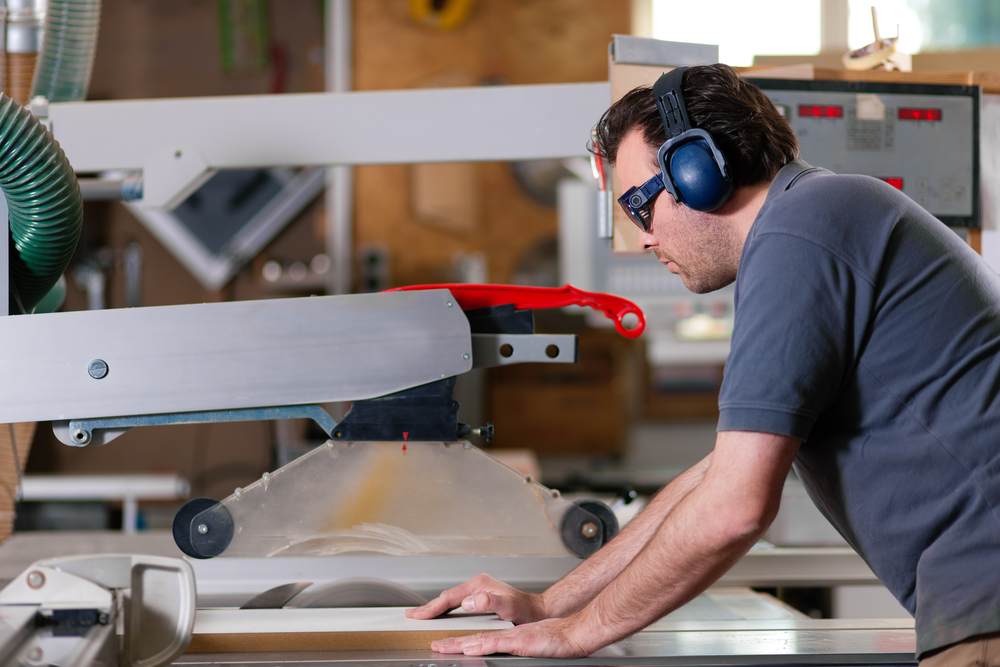
Your hearing health can be drastically affected by extended noise exposure, especially in settings where noise intensity surpasses safe limits. Ear protection is important for both the prevention of hearing impairment and for keeping concentration in loud settings. So, how do you determine the optimal level of hearing protection for your situation?
Interpreting noise volume and its consequences
Noise damage depends not only on the loudness of the sound but also on how much time you are exposed to it. dB’s are the fundamental unit for measuring sound levels and measuring sound volume. Hearing damage can begin when sound intensity hits 85 dB or more, particularly after sustained exposure.
As a frame of reference, 85 dB is about the same loudness as the sound of city traffic perceived from within a car. Though this loudness might not seem excessive, spending eight hours in it continuously can lead to hearing impairment. As the sound increases in volume, the amount of time you can be exposed securely decreases:
- Damage can result with up to 4 hours of exposure at 90 dB (Lawnmower).
- Keep your exposure to 100 dB (Power tools) to less than 1 hour.
- Damage is possible after only 15 minutes at the 110 dB level (Leaf blower).
- 120 dB (Rock concert): Any exposure at this level can damage your hearing.
- Immediate pain and damage are possible at 140 dB (Jet engine).
How to detect hazardous noise settings
It is paramount to use hearing protection if your routine exposure is to noise levels of 85 dB. Such protection is most critical in industrial settings, including plants and construction sites, or other places where high noise is produced by tools, equipment, or machinery.
Even outside of work, there are circumstances where hearing protection can be advantageous—attending concerts, using leaf blowers, or engaging in recreational shooting sports are all activities that can expose you to dangerous noise levels.
Choosing protection based on Noise Reduction Ratings (NRR)
The effectiveness of hearing protection is assessed by its Noise Reduction Rating (the NRR). The NRR value shows the level of sound attenuation, stated in dB, that the protector provides. Higher rating values offer superior protection. For example, earplugs with an NRR of 30 dB can lower an 85 dB noise level to 55 dB, keeping you comfortably within safe exposure bounds.
In choosing protection, you must gauge the precise noise levels you are exposed to and verify your chosen protector reduces the volume sufficiently to remain under 85 dB.
The important function of comfort in consistent protection
The NRR is undoubtedly important, but comfort is a similarly significant component in achieving consistent, long-term use. If hearing protection feels uncomfortable or bulky, you may be tempted to remove it—leaving your ears unprotected to hazardous noise.
Choosing well-fitting hearing protection leads to continuous wear, thus lowering the risk that you will be exposed to noise occasionally. If, for example, earmuffs feel ill-fitting or weigh too much, you are inclined to take them off periodically, resulting in hazardous noise exposure.
A look at the different forms of hearing protection
A range of hearing protection devices are available, all with their own set of advantages and disadvantages:
- Foam Earplugs: These sit inside the ear canal and offer excellent noise reduction. They’re lightweight and disposable but may feel uncomfortable for some users.
- Being reusable and resting just outside the ear canal, Pre-Molded Earplugs are a more sustainable choice and are also easier to insert and remove than foam earplugs.
- Earmuffs, which cover the entire ear, are well-suited for environments with changing noise levels due to how easy they are to take on and off, but they can be heavy or hot during prolonged use.
The best choice of protection is determined by your individual comfort and the particular demands of your environment. For instance, workers in construction may prefer the convenience of earmuffs, while factory personnel might select earplugs for continuous wear.
Ensuring consistent use
The most highly effective hearing protection is the one you’ll wear without fail. Any break in use, even for a few minutes, can have long-term consequences for your hearing health. It is extremely important to identify a solution that strikes a balance between comfort, protection, and convenience for this reason.
Taking steps for lasting hearing protection
We are constantly surrounded by noise, yet choosing the correct protective device ensures your ears are protected, allowing you to keep enjoying your acoustic surroundings.
Call us now to discuss your likelihood of hearing loss from noise and the optimal ways to safeguard your hearing.